When Global Warming takes a break and the bitterly cold weather moves in from the Arctic, it’s best to be prepared.
Layering is important, but there’s a lot more you should know when you head into the deep freeze.
Here are some tips for surviving the cold weather ahead…
Those who live in traditionally cold climates have a pretty good handle on how to stay warm and safe during cold outbreaks. It’s the folks from more mild parts of the country who can be caught off guard.
Mostly, it’s the lack of necessary shelter which can lead to serious problems.
In the deep South, a temperature of 30 degrees can be devastating to people who live in homes with no heat. The best idea is to prepare before the cold weather arrives.
Emergency Supplies
The Center for Disease Control recommends the following in their Emergency Supplies List:
- an alternate way to heat your home during a power failure (dry firewood for a fireplace or wood stove; or kerosene for a kerosene heater)
- furnace fuel (coal, propane, or oil)
- electric space heater with automatic shut-off switch and non-glowing elements
- blankets
- matches
- multipurpose, dry-chemical fire extinguisher
- first aid kit and instruction manual
- flashlight or battery-powered lantern
- battery-powered radio
- battery-powered clock or watch
- extra batteries
- non-electric can opener
- snow shovel
- rock salt
- special needs items (diapers, hearing aid batteries, medications, etc.)
I encourage you to go to the CDC’s website to read more about preparing yourself, your home and your vehicle for cold winter weather.
Important Winter Tips
The National Safety Council has some important tips about staying warm on their website.
For example, did you know that your neck is one of the places heat is lost most quickly from your body? It ranks right behind the top of your head as an open door for heat to escape.
Their site also includes tips on what to do if you suspect someone has frostbite or hypothermia.
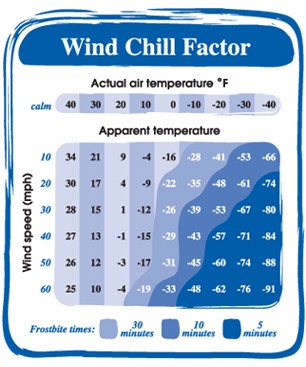
It’s important to understand how much of an impact the wind can have on your body’s heat loss. The moving air takes heat away from your body making it feel colder than what it really is. You should prepare for the wind chill!
The chart below gives you an idea how quickly you can get into trouble as temperatures fall and the winds pick up.
Warm Weather Attire
Finally, if looking good is as important as feeling good, here are a few links to cold weather gear sites which can keep you warm and stylish!
There is nothing more important than being prepared. Whether it is extreme heat, extreme cold, hurricanes, tornadoes or floods, preparation can be the key to staying alive.